Finding Pan

This spring, I traveled to southwest Florida where my namesake hurricane had made its explosive landfall the previous October. In June, I navigated life along with millions of others under the heavy haze of forest fire smoke. Most recently, violent floods washed through several towns in south-central Vermont, where I’ve lived for several months cumulatively since graduating from college in 2018. Yet even treading repeatedly within the direct footprint of climate change, I could not shake a nagging sense of incompleteness—that I have somehow come no closer to comprehending the full forces at play.
Extreme weather may serve as evidence of climate change, but they are snapshots of a much larger process. Climate change is as much an undermining of the way we make sense of the world as it is a self-contained object as such. Climate change is a sunburn, an acid ocean, an expanse of algae, a burn scar, a mutated pathogen. It is silence where there should be sound and noise where there should be none. It is the afterlife of acts committed generations ago and it is not here yet. Yet its essence cannot be grasped directly. Extreme weather is only the shadow cast by this phantom.
Attempting to squeeze a treatment of global climate change into the bounds of ordinary discussion only obscures its true nature. I suggest we dim the lights and dream…
Pan was old even when the ancient Greeks learned of him from the Arcadian mountain tribes. Secluded from view, he preferred to roam the woodland hills, tending livestock and hunting game. Unlike his more refined relatives Artemis or Hermes, Pan presented a distinctly bestial figure, ravenously pursuing his favored nymphs and sowing panic in foes. Offensive and alluring, powerful and marginalized, he brings together fertility, replenishment, music, vengeance, chaos, violation, and mortality. Pan embodies the painful contradictions of the natural world.
Much as Pan could multiply into a swarm, his image has taken many forms in different settings since antiquity. A brief survey includes the Wiccan horned god as well as the faun from Pan’s Labyrinth, leering at the borderlands of the underworld. When he aids the film’s protagonist, it is not out of benevolence but of an alien curiosity and indifference towards any individual life. In Princess Mononoke, the deer god silently patrols the forest depths, taking and restoring life in equal measure with each stride. And while the deer gods arguably spring from a different lineage than that of the satyrs and fauns, Pan’s offspring together remain a penetrating reminder of a tangled rift lurking beyond the scope of civilized life.
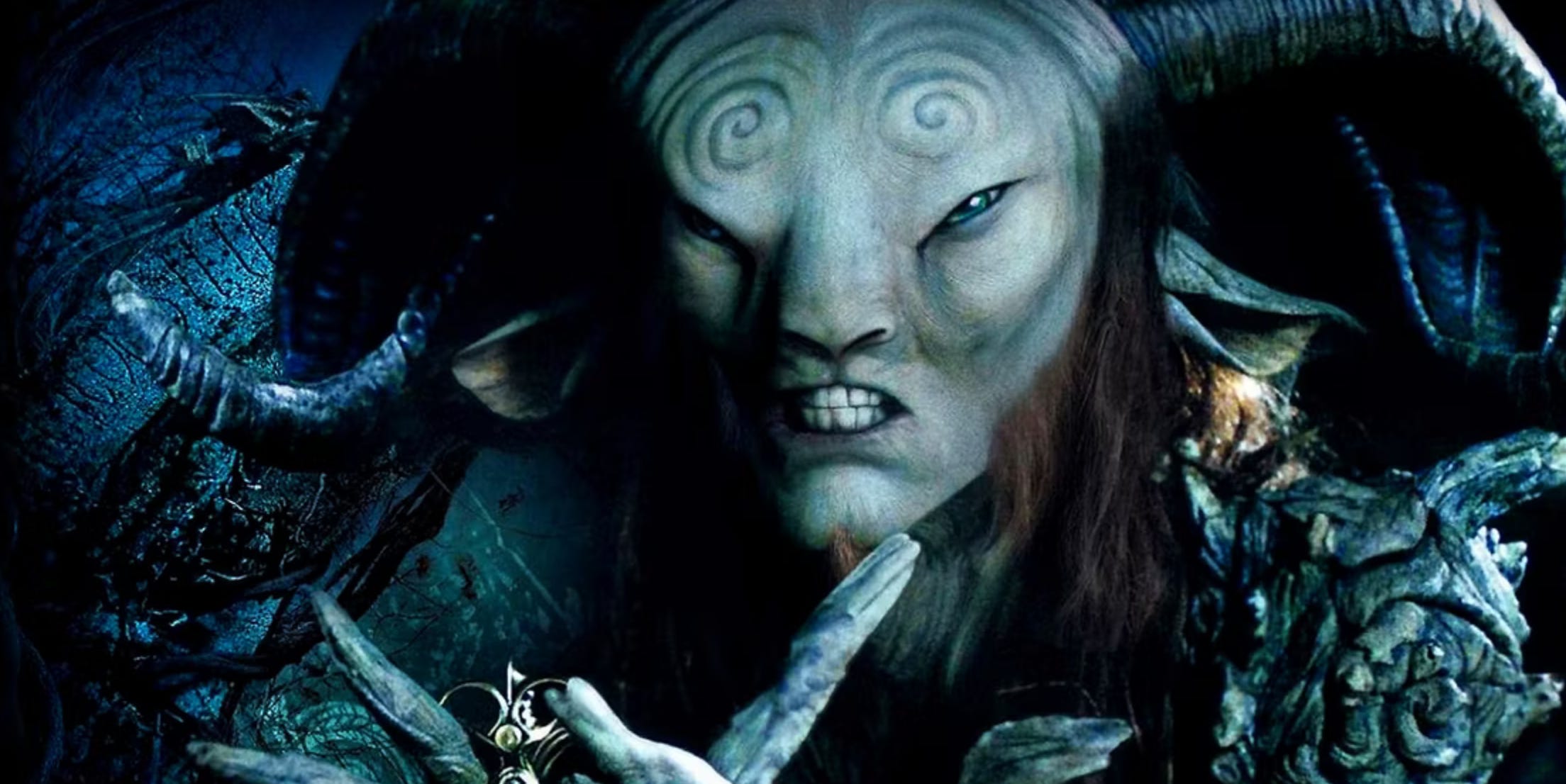
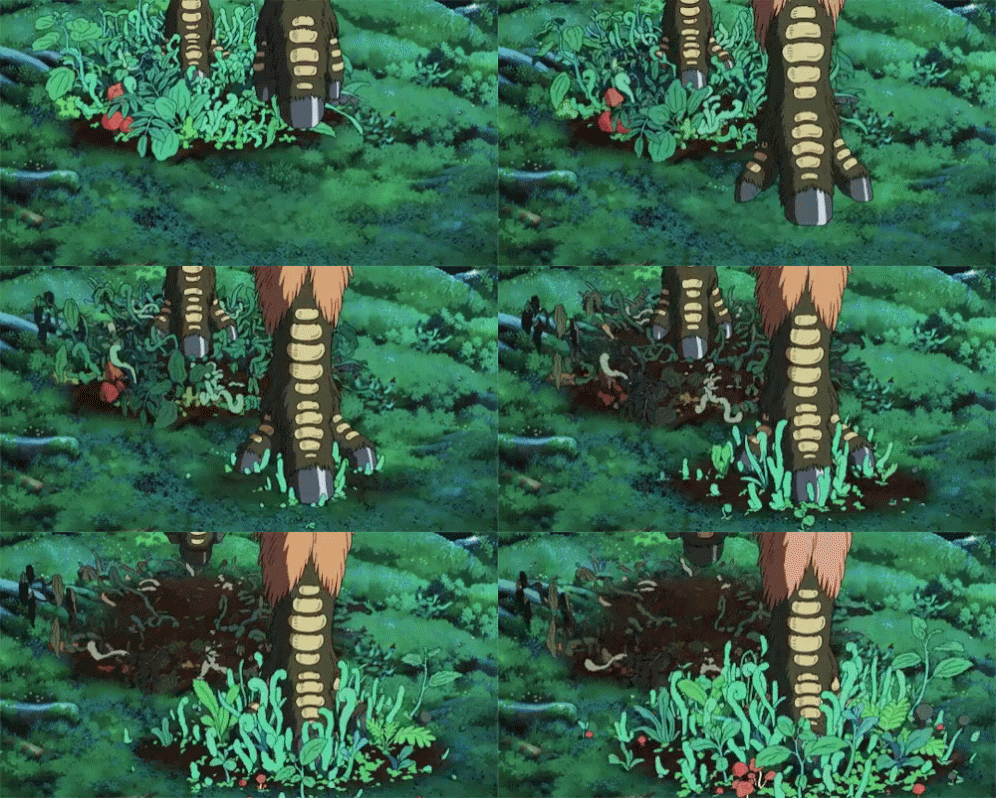
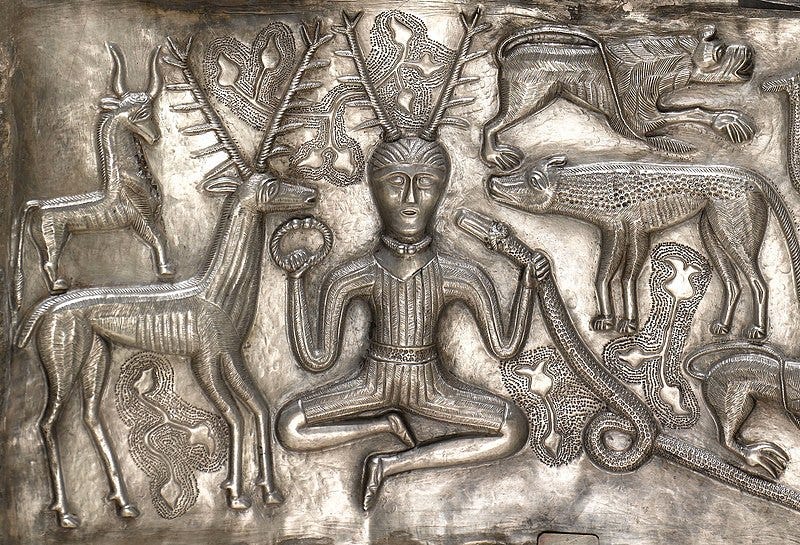
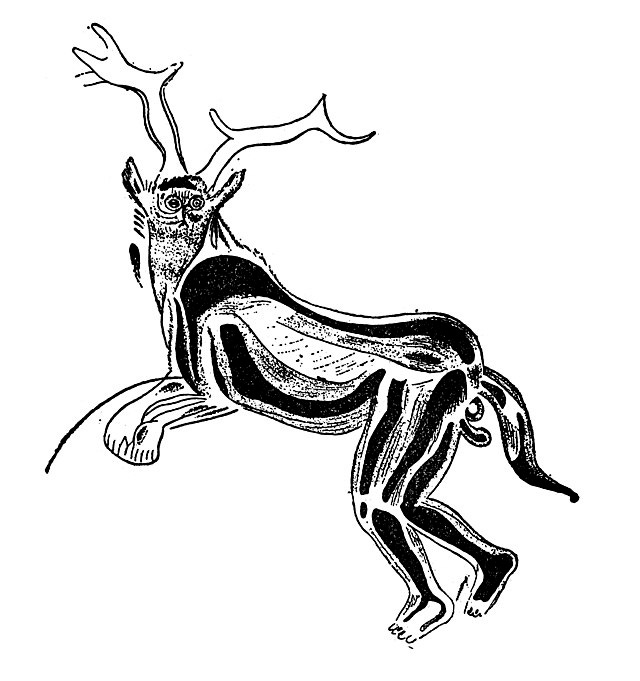
Variations on a theme, across time and continents. All images from Wikipedia.
One feature separating Pan from the rest of the Greek Pantheon is his mortality. Pan’s demise was documented first under the reign of the Roman emperor Tiberius, following the birth of Christ. More recent authors associate Pan’s death with the triumph of modernity:
Then keep the tomb of Helice,
Thine olive-woods, thy vine-clad wold,
And what remains to us of thee?Though many an unsung elegy
Sleeps in the reeds our rivers hold,
O goat-foot God of Arcady!
Ah, what remains to us of thee?
In the premodern case, Pan was a self-evident living figure who acted upon the world, rather than one among many latent symbols. To the Romanticists, Pan’s loss was now understood symbolically as he was never truly there at all, even as environmental destruction was being literalized across the European countryside. Per James Hillman in Pan and the Nightmare,
When Pan is alive then nature is too, so the owl's hoot is Athena and the mollusk on the shore is Aphrodite... When Pan is dead, then nature can be controlled by the will of the new God, man, modeled in the image of Prometheus or Hercules, creating from it and polluting in it without a troubled conscious.
My contribution here is to suggest that the terror and humility we know as a result of the turmoil of climate change reveals the continued presence of larger-than-life demigods. When we spot wayward migrations, upend our routines, abandon our homes, or savor an unseasonably warm evening: this is Pan’s work. To know this source is to restore the generative agency of natural forces that were thought to be extinguished centuries ago. This time, though, he’s back in ghost form—an existence denied by most, unimpressed by our attempts to appease.
What would it mean to organize communities holding closely to this understanding?
Panarchy is an ecological concept that invokes both an antidote to hierarchy and a nod to Pan’s power. In a panarchy, the cycles of a system are nested together across several spatial and temporal scales to describe the system’s response to stimuli. This approach honors the changes that naturally occur across such assemblages while suggesting interventions that uphold system resilience without introducing excessive rigidity as often happens when humans engineer their environment.
It may be worth grounding this theory in the case of a lake. Over the course of a year, the surface area, depth, temperature, nutrient composition and biomass content of a lake will all vary. However, these relatively rapid cycles, such as higher flow rate in the spring, freeze dates in the winter, or phytoplankton blooms in the summer, occur in such a way as to maintain the lake’s capacity for certain essential functions. This lake also depends on larger resource flows, such as tributary inflow volumes and the spread of species from other sources. These are in turn governed by even larger economic and climatic processes, like mass fertilizer application, anthropogenic demand for water, global trade patterns, and planetary temperature trends. While expansion, stability, collapse, and renewal are always to be expected, panarchy theory suggests that a stable system will trend back towards its “domain of attraction” until conditions dictate otherwise. If healthy, a lake will remain a lake, rather than an anoxic puddle or golf course.
For resilience to persist, local adaptive cycles must be able to integrate information from the slower-moving cycles surrounding them. When introduced species appear, ecosystem functions will initially be degraded before accommodating the newcomer, adapting in such a way that the external changes become internalized. This logic applies even in unexpected situations. A lake may dry up entirely if enough feedback pushes it in that direction, but it may still retain its status as a stable system, albeit in a new state. What matters is that larger grounding conditions do not shift so fast as to undermine the ability of smaller, quicker systems to maintain their adaptive capacity.
With Ghost Pan running loose, that is exactly what we see. Supercharged with two hundred years of dark fossil fuel energy, changes that might otherwise have taken thousands or millions of years can now proliferate in a matter of decades, if not faster. Circulating at such speed and altitude, these shifts fail to impart information on the systems they contain because they have no coherent message. Climate change is more epoch than event, infusing all other happenings with its signature. Our only response is to form an offering in our own lives: to tread lightly, give more than we receive, and establish bonds that allow us to reconstitute ourselves when the ground inevitably falls from beneath us. In the meantime, my own work is concerned with exposing the weird contingencies of the everyday and bringing weird entities back down to Earth from their invisible orbits.